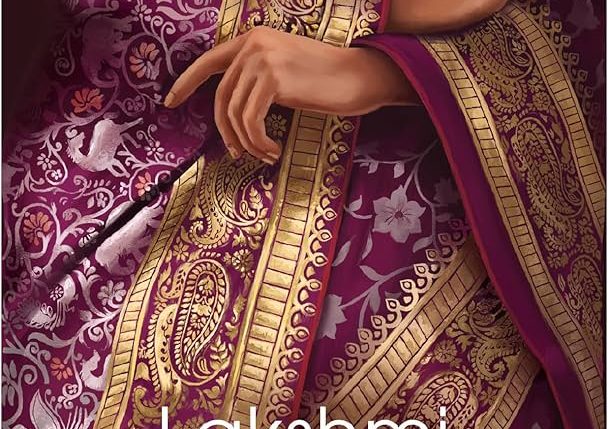
Book review: The Saree Eternal by Lakshmi Murdeshwar Puri
Deconstructing the drape
In this Essential India monograph from Aleph Books, former diplomat Lakshmi Murdershwar Puri looks at saris and their genealogy. Choosing the personal route, Puri invites readers to step up to her almirah of saris and proceeds to give the backstory to each drape.
The sari is the oldest surviving garment in the world , dating back some 5,000 years to the Indus Valley Civilization. This is a storied history, made all the more glorious when you take in the many versions of the garment in terms of textile, weave, pattern and drape.
Unstitched cloth, says Puri, has always been associated with sanctity, completeness and transcendence, verily a civilizational stance. This is feminine shakti as depicted by goddesses, princesses, the everyday Indian woman, she states, and then dives into the sari`s religious significance, how it finds a place in Vedic literature, in ancient paintings, on the forms of Hindu goddesses. There are descriptions of Draupadi`s sari at the scene of her public humiliation, Sita jettisoning her fine silks for a `plain saffron sari` when headed into the forest, Shakuntala`s sari with its close-fitting upper garment.
Puri then takes us — and the sari — through a hop-skip-jump tour of the garment in the Maurya, Shunga and Gupta periods. Quick cut to the way the Bollywood heroines of yesteryear – Waheeda Rehman, Vyjayantimala, Rekha, Madhuri Dixit, Meena Kumari — and those who followed in their footsteps (sari-wearing politicians Kangana Ranaut and Smriti Irani, as well as TV news anchors Navika Kumar, Smita Prakash, Palki Sharma all get a mention here) wear their drapes with elan, ending with the drape therapy favoured by Gen Z.
The saree as our mothers wore them
When the author talks of her mother who wore saris even to bed, it will immediately resonate with a generation of people who remember their own mothers changing into simple cotton saris at night, mothers who mopped up the messes their children made or staunched bleeding wounds with their sari pallus.
Interestingly, the author`s mother told stories where sari-clad heroines literally saved the world, using their drapes variously as flying carpets, ropes, a tool for murder or suicide, a clever camouflage or of course, a disguise.
Puri weaves her personal history into the warp and weft of the sari and is not above a spot of self-promotion, too. There are lines like `Those who know me from college remember me as the one who elevated the sari into something cool` and `I was told by my diplomatic counterparts that these airy saris gave me an ethereal look.`
The the pen and ink sketches that dot the start of each chapter are striking. Puri`s style verges on the florid, with descriptions like `unstitched river of fabric;` she describes herself as an aspiring `sari sommelier,` averring that her immersion in the world of saris has ignited (her) five senses of sight, sound, smell, touch and taste. At one point, she says the sari ….`is a nari-shakti-based feminist declaration of independence by women,` and the reader can only shake their head.
Lakshmi Puri talks up the sari aplenty but in a rather shallow manner. The irony here is that this splendid garment deserved better.
The Sari Eternal. By Lakshmi Murdeshwar Puri. Aleph Books.Rs 499. 186 pages
https://www.newindianexpress.com/lifestyle/books/2026/May/03/not-draped-well-enough
This appeared in TNIE of 3 May 2026.
 Sheila Kumar • May 4, 2026