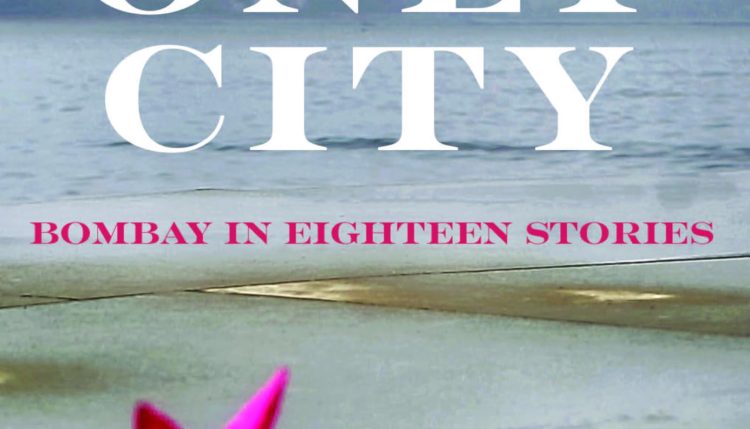
Book review: The Only City, Bombay in Eighteen Stories, edited by Anindita Ghose
Bombay stories
This anthology joins the canon of other books on ‘the only city’ as Khushwant Singh once called Bombay. Edited by Anindita Ghose, it has contributions by a diverse and exciting mix of writers, names well known and relatively unknown to readers.
We see the city — challenging, impersonal, complex, careworn, unforgiving, complicated — through the individual experiences of those that live here; in the palimpsest of writings on Mumbai that was Bombay, it is always the city itself that takes centre stage, and the dedication underlines that: For the fools who leave, / But more for the fools who return.
As we have always known, life there seems a constant hustle for the denizens of Mumbai, a hustle just to survive or, propelled by a desperation to escape their circumstances, to make good their future lives. For the aspiring actress in Diksha Basu’s ‘Bollywood, Baby,’ the desire to make it in tinsel-town dictates her actions and the compromises she makes, as it does for all those who knock on the doors of the film industry every day. The nurse in Tejaswini Apte-Rahm ‘Nurse Shanti’ and the maid in ‘The Girls of Visty Villa’ by Namita Devidayal want to escape their squalid circumstances, and this leads them to behave in ways wherein some lines are crossed. And of course, there is a building society story that has us smiling with amusement as well as flinching at the protagonist’s behaviour; though rendered humorously by Kersi Khambatta, the story makes an important point, that those wielding power who act out their prejudices can be a challenge to those trapped in those spaces. The authors` tone in these stories are not judgemental; we are merely presented with the cause and effect that comes into play under the circumstances.
Elsewhere, the writers turn their gaze on the vulnerabilities of people who are caught up in the push and pull of living in this big city where wanting to belong and riding on aspirations play a big part. In the ironically titled ‘Normal Neighbours’ by Anindita Ghose, a couple finds themselves in an uncomfortable situation, escape from which seems optional but could render them outcasts. In Prayaag Akbar’s ‘Hoodbhoy House,’ a couple resorts to using their daughter to strengthen their personal and professional network. And in Dharini Bhaskar’s ‘Silver Clouds,’ the words dance around reality as the main character slowly reclaims her true feelings, at times wondering if she was in love with a man or if she was in love with the idea of Bombay when she was with that man.
Stark inequities
The inequity that exists is woven neatly but starkly into quite a few stories. Even as an aspiring actress pays an indecent sum for a suffocatingly small space which is actually the servants` quarter, the big bungalow Visty Villa is home to just an old Parsi lady and her two life-size dolls. And in the striking short story ‘Two Bi Two’ by Prathyush Parasuraman, the lack of space and privacy in a congested city results in an intimate act taking place in a public area.
Lindsay Pereira’s excellent story ‘Strays’ has Bombay baring its fangs to the inhabitants on the lowest rung. The struggle to survive is unrelentingly hard and of course a city renders itself vulnerable when it treats the poorest as disposable goods. It is a timely, urgent story, as is Jeet Thayil’s dystopian tale ‘Your Meat in My Hands.’
All these stories capture a Bombay minute, narrow their focus on a distinctly unglamorous city and none of these stories really hold any surprises (except for the editor telling us in her Note, that right up until 1955, Bombay Time was 39 minutes behind IST, and that the city`s Parsi fire temples still follow Bombay Time), yet cast a reflective/jaded/jaundiced eye on the city. They all carry a quantum of sadness but the underlying sentiment is an unacknowledged but deeply felt love – love, not mere affection – for Bombay, by the laconic elites who spend their days` exquisitely and expensively bored; by those who grit their teeth and plunge into the daily grind; by those who live in tranquil airy apartments with large windows and those who live in slum tenements.
The distinctive photographs by Chirodeep Chaudhuri interspersed with the stories act as effective counterpoint, the zeitgeist of the city captured in a single image at a time. The reader`s eye stops at each of these snapshots, only to return to it later, seeking more details. The first one has ‘HOMECOMING’ written above an entrance to a building. Perhaps for all the writers in this anthology, some who belong to the city, some who have migrated here, others who have left but are still looking over their shoulders, this holds true…Mumbai /Bombay is home.
The Only City/ Bombay in Eighteen Stories Edited by Anindita Ghose. Fourth Estate Books. 352 pages. ₹ 699
This ran in TNIE`s Sunday magazine of 5 April 2026.
Related Links:
Book review: Bombay Balchao by Jane Borges
Book review: The Eleventh Hour by Salman Rushdie
Book review: The Kidnapping of Mark Twain by Anuradha Kumar
Book review: Nautch Boy by Manish Gaekwad
Book review: The Mistress of Bhatia House By Sujatha Massey
 Sheila Kumar • April 6, 2026