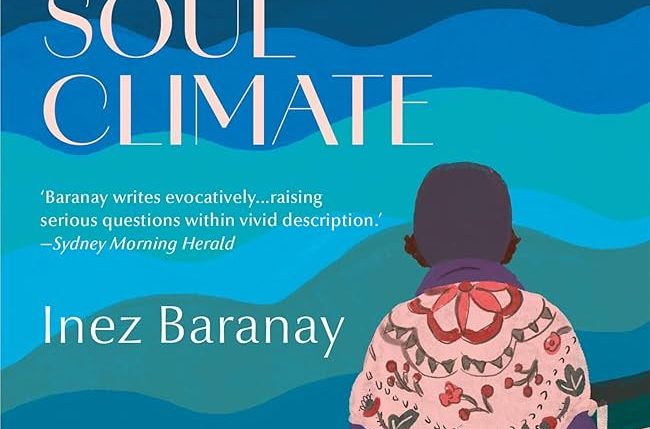
Book review: Soul Climate by Ines Baranay
A soul connection
If, like this reviewer, you are not too familiar with the work of the late Turkish writer, activist and Member of Parliament Halide Edib Adivar, this book by Ines Baranay will make you seek Halide`s books out. At a time when the ties between India and Turkiye have frayed, Baranay has explored the connection between the two, through Halide’s visit to India.
The story is an inventive braiding of memoir, fact and fiction. Breaking the fourth wall, there are chapters where the author tells the reader directly where her imagination has come into play. The narrative unfolds at a gentle pace, is filled with socio-political nuggets, and is more driven by ideas than plot.
The factual part of the book deals with a trip that Halide Edib made to India in 1935, fulfilling a promise made to an Indian friend Dr. Mukhtar Ansari she had met back home in Turkiye. Halide, an intellectual and freedom fighter, is visiting at a very important time in history — when India is fighting for independence. She gives lectures and travels and meets important figures of this movement, including Mahatma Gandhi, whom she will go on to spend time with, and also to confess that her thoughts on India has been influenced by Gandhiji.
The fictional aspect of the book concerns three cousins and close friends, Zoya, Aisha and Nuran, staying at Dr. Ansari’s house in Delhi. It is their coming- of- age story set against the backdrop of the freedom struggle. As they meet Halide, attend her lectures and listen to her talks, their ideas and opinions take shape. This in turn, impacts the kind of choices they make as regards their future life. As India fights for independence and is figuring out the complexities this entails, these three young Indian Muslim women must do the same. It shows how the political reality of a time plays out at a personal individual level.
India and Turkiye
Baranay gives us a perspective of the country through Halide ‘s eyes, and then gives her thoughts on the same. The two combined lead to interesting reflections. Halide writes about the terms she encounters: communalism, nationalism and socialism. This gives the author room to dwell on all three and their relevance today and she goes on to extrapolate on how the meaning of being a nationalist has changed. At that moment in history, it meant standing for independence. But today it has acquired a more insular nativist connotation.
The socialism regarded as an ideal back then, especially with regard to the economy, has been all crushed under the boot of global capitalism now. Communalism, on the contrary, remains entrenched even today with even more violent manifestations.
Halide was perceptive enough to realise even back then that there is a Hindu India and a Muslim India. She accepts this duality without probing the part that years of colonial rule played in engendering it. She does feel, though, that this division works against the unity the country is striving for. All of this holds true today.
The idea of patriotism and what it means is discussed. Halide considered herself patriotic and was a freedom fighter. However, as her ideas for her country and the direction it should take clashed with the ruling dispensation, she was forced to go into exile. It is made clear t to the reader that the definition of patriotism is decided by those in charge. So, a person like Halide found herself banished, denied the rights of her citizenship. This resonates with developments taking place here and now.
In another engaging detour, the author talks about present-day Delhi and how it is and it is not the city Halide had visited long ago. In the ongoing process of memory and forgetting, certain things are conveniently dredged up from the past while others bits are obliterated. And so it stands to reason that contrary to what Halide thought will happen, a nationalist like Dr. Ansari is not honoured and neither is his house, that haven of inclusivity, retained as a national monument.
When finally Baranay gets to see pictures of the house, it is quite poignant; the house comes alive on the page through detailed description.
The choice to eschew punctuation in quite a few places is distracting, and the digressions by the author does feel a tad stretched in places. However, in exploring the ideas of the past and their relevance and change in today’s context, Soul Climate makes for an absorbing read.
In the preface to her memoir of India, Halide says it was closer to her `soul climate` than any other country. She meant that she felt both a sense of familiarity and belonging here. In the present divisive times, a book like this can remind us that it is commonality rather than differences between countries that should matter.
Soul Climate by Inez Baranay . Speaking Tiger Books. 270 pages. 499 rupees .
https://www.newindianexpress.com/lifestyle/books/2026/Jun/21/a-tale-of-two-countries
This ran in TNIE of 21 June 2026.
 Sheila Kumar • June 21, 2026