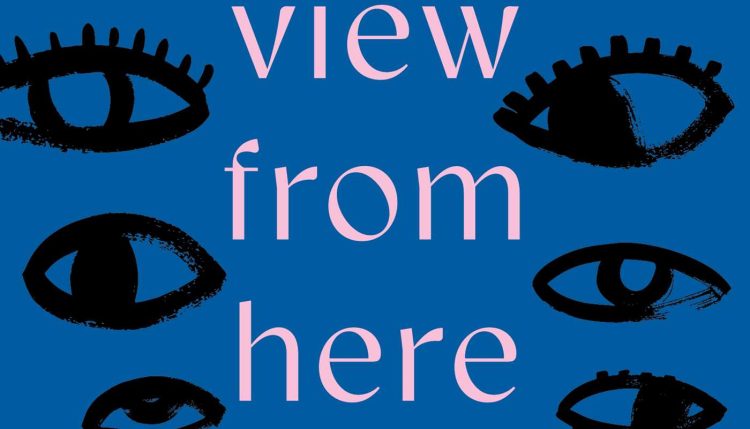
Book review: The View from Here, edited by Githa Hariharan and K. Satchidanandan
Singing in dark times
Each story and poem in this anthology works as both a snapshot and a time capsule of a particular part of India. The editors, Githa Hariharan and K. Satchidanandan, have selected the short stories as well as the poems from the respected literary journal Guftugu, and the accounts adroitly entwine the personal with the political.
The themes can be broadly classified as discrimination along the lines of caste, religion and gender, with the message folded into each in the writer or poet’s individual style.
Kamala Das’s ‘The Holy Cow,’ the first story here and written in her trenchant, fearless way, deals with the injustice meted out by religious figures. Satire and black humour are used to sly effect in Manto’s allegorical tale of an uprising of monkeys and the humans who have to deal with them.
Then there are the stories dealing with caste and inequality. The heroine from a lower caste in Dalpat Chauhan’s ‘The Visiting Card,’ despite facing bias that acts as a blight to her future plans, still has the determination to get a doctorate. The end of the story has Chauhan showing us that some victories remain incomplete unless internal change also takes place; the woman has defied the odds to get her Phd but still hesitates to confront her former tormentor.
Both this woman and the little Irula girl in Zai Whitaker’s ‘Roots,’ however, make an attempt to change their status quo. As does Sridhar, the little boy kept away from his father who is of a different caste, in Aparna Karthikeyan’s story. It is the emotional core in these accounts that make them affecting.
The many forms of discrimination
In other stories, we see how gender- based discrimination plays out. In Latha Viswanathan’s ‘Brittle,’ a young girl bears witness to the circumscribed life an older woman leads. In Salma’s ‘The Orbit of Confusion,’ the women seem to be caught in a loop of treating one another badly. The story is written in an epistolary format and the revelation at the end has both the woman’s daughter and the reader see things from a different perspective.
The most moving story amongst these is ‘Iddath;’ in Bolwar Mahamed’s Kunhi’s poignant telling of this tale, we get to know a young widow and her hopes, dreams and desires. It is a masterful depiction of unfulfilled sexual desire and the accompanying loneliness, and there is a lingering melancholy in the way the barren nature of her life is conveyed.
Religious discrimination plays its part in quite a few of the stories. You have the delightful ‘Of Beef, Biryani and Ghafoor’ by Asma Anjum Khan where friendship between a Hindu and a Muslim wins the day in these polarized times. In contrast, in Vaasanthi’s powerful ‘Idaiveli-Gap, ’ the wrongful incarceration that a young Muslim boy endures does not end with his release, and prison bars remain in an invisible fashion trapping him in a life not of his choosing. Gita Jayaraj’s ‘Kashmir Album’ also pulls no punches in depicting life under siege in Kashmir.
The decision to end this section with Jayant Kaikini’s ‘Unframed’ holds out a ray of hope for the future. Told in his observant, gentle and quiet style, it has strangers becoming family, and humanity triumphing.
And of course, politics runs through the poems, too, though with broader brush strokes. Kashmir is the subject of T.P. Sabitha’s ‘Stones,’ an unflinching depiction of the reality, and an elegy for a lost time. Manash Firaq Bhattacharjee’s two poems are a lament for Kashmir and for Hafiz Junaid who was murdered. The lines are stark with underlying rage: ‘They broke your body of fasting/to feed wolves in the heart.’ Lal Singh Dil conveys the challenges of loving a person of another caste in a poem of just seven beautifully crafted lines.
Some of the lines of poetry dance on the page like this ‘My songs are water, I am only a fleeting line on its surface’ by Surjit Patar or these by Arundhati Subramaniam, ‘But even as I meander/let my trail/be the thread /that completes the circle/I long to make around you.’
Brecht’s famous words of singing about dark times is quoted in the editors` notes. The well-chosen stories and poems in this anthology does just that whilst being both illuminating and absorbing.
The View from Here, Stories and Poems of Many Indias, edited by Githa Hariharan and K. Satchidanandan, Simon & Schuster, 417 pages, Rs 599.
This ran in The Hindu`s Literary Review of 12 July 2026.
Related Links:
Books: Best Indian Fiction of 2022
Book review: Digesting India by Zac O`Yeah
Book review: A Case of Indian Marvels edited by David Davidar
Book review: Ancient India, Culture of Contradictions by Upinder Singh
 Sheila Kumar • July 10, 2026