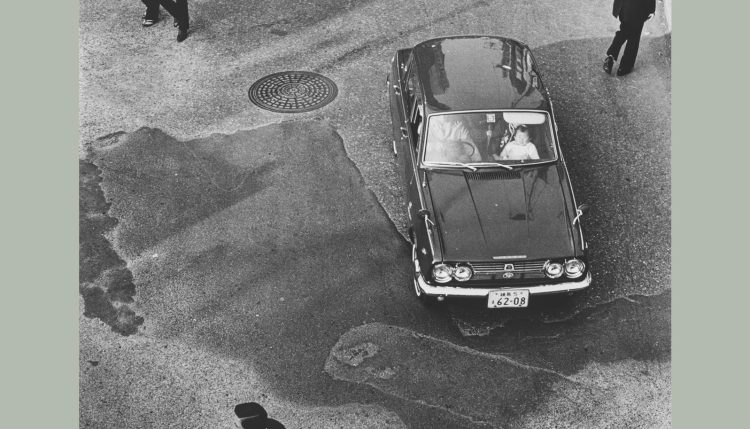
Book review: Twilight in Musashino by Seicho Matsumoto
Web of Deceit
It takes special skill as a crime writer to keep a reader engaged despite revealing who the perpetrator is halfway through the book. This is the case in ‘Twilight in Musashino.’ Then again, the author Seicho Matsumoto is no ordinary crime novelist. He is a veteran, the founding father of Shakaiha or the social school of crime- writing.
In this kind of fiction, crime is the lens through which socio-political realities of post-war Japan is explored. The story at the core of this crime novel published in 1951, unfolds in the titular Musahino on the outskirts of Tokyo. One of the main characters is the Basilio Order of the Guglielmo Church, a charitable Christian mission operating in the area. The author gradually introduces us to various people connected with the church, and it soon becomes clear that under the guise of being a religious institution, it is involved in all sorts of illegal activities like black- marketing, the smuggling of contraband goods and even drug- running. They are not acting alone, a shadowy secretive trader directs all these activities to insidiously gain total control of the church.
In the midst of all this, a young handsome priest starts an illicit relationship with a woman who works at a nursery school affiliated to the church. The priest is soon made treasurer of the church and in this capacity, has to deal with the sinister trader and do his bidding. The trader arranges things so that the woman is given a job, with an obviously nefarious motive in mind. It culminates in her murder at midpoint in the book and an investigation begins, with a seasoned detective leading it.
As a longtime reader of all types of crime fiction, it is fascinating to see how the Japanese differ from their Western counterparts in this genre. In the Western version, we get a crime or crimes, followed by an investigation and the eventual solving of the same. The whodunit is the prime driver of the story, the tension is ratcheted up in calibrated fashion. Very often, the trope of the lead detective being an alcoholic loner, albeit brilliant, is invoked. The violence is usually graphic. This is different from the British “closed door” mysteries where the location plays an important part though here too, unmasking the perpetrator is the singular aim.
A psychological study
Japanese crime fiction operates on both a different plane and mood. The whodunit aspect is not as important so much as the why. This ‘why’ is usually quietly explored at length. The reader is given a larger picture of the forces at play, the mood is contemplative, the tone melancholy, the drama is muted.There is a quiet observation of events unfolding that adds to the tension.
All of the elements mentioned above hold true of this book as well. It is a slow-burn atmospheric thriller, the violence is implied and there is restraint when that violence is described.
A large part of the book focuses on the different relationships the story holds, a subtle psychological study of why people do what they do. In the case of the young priest and the woman he is involved with, we see how their individual circumstances and societal expectations constrain both of them. The priest is an interesting character study. The church provides him an escape from his impoverished past but then plays him as a pawn for their own needs. His subsequent actions then, are not those of a villain but a pitiful creature who lacks the will to do that which is right.
Then, the narrative examines institutional corruption. The Guglielmo church is able to act with impunity because their tentacles reach all the way to the top. The leniency and long rope that Japan, in the post-war scenario, gave these foreign religious orders, is fully exploited by them.
The corrupt system is painted as the antagonist rather than an individual. It stands to reason then that the police investigation is severely hampered. Decisions are finally taken by the Prime Minister that do not serve the cause of justice, influenced as he is by the power the church wields.
The takeaway? That victories are small and the system always wins, as also a stark reflection of the upheavals in post -war Japan, struggling as it was with largescale industrialisation and an emotional reckoning.
Matsumoto’s style of writing is quiet and observant. Everything is understated, the prose is simple and the setting of Musashino, inextricably linked to the plot. And for the kind of crime writing that he specialises in, rooted as it is in reality, the ending is predictably nihilistic. This is no grand battle between good and evil. This is an account of individuals trying to their job blighted by the system they have to operate in. As one investigator puts it, ‘Some cases are solved through big, dramatic breakthroughs; others, like this one, by quietly working the angles. What never changes is our commitment to the task at hand.’
This book, then, is classic Japanese crime fiction from a master.
Twilight in Musashino by Seicho Matsumoto. Penguin Classics. 450 pages.699 rupees.
This appeared in TNIE of 6 September 2026.
Related Links
Book review: Butter by Asako Yuzuki
Book review: The Travelling Cat Chronicles by Hiro Arikawa
Book review: Orienting, an Indian in japan by Pallavi Aiyar
Book review: A Beginner`s Guide to Japan by Pico Iyer
 Sheila Kumar • September 5, 2026