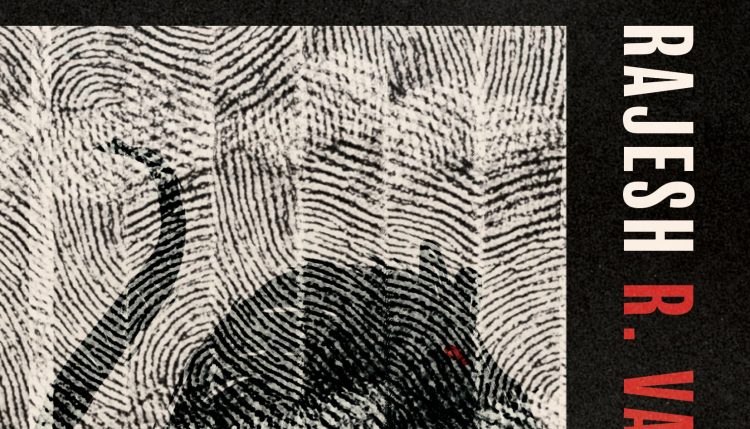
Dystopia in Keralam: The Red Badge by Rajesh R Varma
Through a glass, darkly
In the Booker 23 prize-winner ‘Prophet Song,’ Paul Lynch drew a chilling picture of Ireland under totalitarian rule in a dystopian future. In the Malayalam original of ‘The Red Badge,’ published some years before the English translation, the author Rajesh R. Varma invents an alternate history where Kerala is under a similar regime. The past and the future depicted in both books are equally terrifying, drawn as they are from current times.
The narrative unfolds in a faux autobiographical format and is told in the voice of a young boy from a middle -class family who bears the author’s name. The year is 1974, the place Tiruvalla. The boy`s life is going to change with a shift to an English medium school; Kerala is simultaneously transforming as it comes under a new ruler. In his new school, the smartest student called Veeramani is one deemed from a socially inferior class, the recipient of the red badge given to the student who comes first in class. Varma covets this badge and yearns to get it. His gradual friendship with Veeramani in no way douses this competitive fire or his disdain for Veeramani’s social status. Eventually when Varma does get the badge, it is a pyrrhic victory.
A fascist government from the north of the country brings Kerala under its control. The Vibhasis, as they are referred to, aim to build an undivided India called Vishala Bharatha. Their leader is a charismatic man given to self- aggrandizement. The author establishes the nature of the dictatorship that takes root by cleverly drawing from the past, as in the concentration camps of Nazi Germany and the forced sterilization programme during the Emergency, as well as touching on obvious parallels that exist in present times.
Varma and his family, with the exception of his father, become ardent supporters of the new regime, as do others in Tiruvalla. Gradually their old way life is erased in terms of what they wear, eat, consume as entertainment or how they think.
In the end, the true horrors of what such a despotic rule entails becomes clear to Varma. Even as he turns the clock back to a pre-Vibhasi time, with the help of a Swami, the ‘phantom history’ haunts him both as memory and future threat.
The author makes an inspired choice in delineating who is othered and persecuted;instead of making the obvious religious minority the target, he opts to make it the Tamilian population settled in Kerala. A chilling message is thus conveyed that nobody is safe, anybody can be tyrannized. All it takes is for an authoritarian government to tap into the inherent prejudices people harbour about those who differ from them, and fan it into a flame.
The complexity of class and caste are also enfolded into the story. Varma and his family belong to a Kshatriya caste but there is a hierarchy even amongst them. They are suffused with caste pride and hubris even as they sense their authority waning. This shows in the demeaning way they talk about the lower castes, and the derogatory lens through which they view them. It is precisely this class and caste consciousness that is harvested by the Vibhasis to ugly ends.
The book has been translated superbly by J. Devika. In her translator’s note she talks of feeling ‘jittery’ not only about the alternate history presented but also because she is familiar with the caste and class hubris that the book talks about.
Urgent and powerful, the tale serves as both a cautionary tale for Kerala and a grim depiction of what is happening in the country.
The Red Badge by Rajesh R. Varma. Translated from the Malayalam by J. Devika. Harper Perennial. 363 pages. 599 rupees.
This appeared in The Hindu`s Literary Review of 27 September 2026.
Related Links:
Book review: Feeling Kerala, anthology edited by J Devika
Book review: The View from Here, edited by Githa Hariharan and K. Satchidanandan
Book review: Under Water by Tara Menon
Book review: The Jasmine Murders by Roopa Unnikrishnan
Book review: The Last days of Earth by Deepa Anappara
Book review: Djinn Patrol on the Purple Line by Deepa Anappara
Book review: Temporary People by Deepak Unnikrishnan
Book review: The Little Book of Goodbyes by Ravi Shankar Etteth
 Sheila Kumar • September 28, 2026