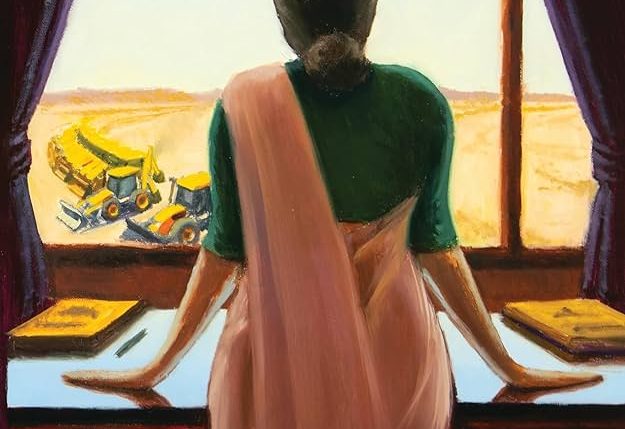
Book review: After the Messiah by Aakar Patel
In the aftermath
Aakar Patel`s first attempt at fiction is interesting to say the least. This political fiction is premised on the sudden demise of a strongman leader, the Big Man, and what happens in the vacuum left in his wake.
This vacuum is primarily defined by utter confusion since the departed leader, who had reformed the entire state around his particular genius, held all the reins of government in his hands, with virtually no one individual being groomed as his successor. Which of course does not deter the top two in the hierarchy from immediately getting into a succession battle; and yes, electoral processes notwithstanding, it is nothing less than a succession battle, with the throne clearly in sight.
In one corner is the departed leader`s second- in- command, a brusque man defined more by his uncouth behaviour and his penchant for intense surveillance of just about anyone and everyone in the political firmament. In the opposite corner is a holy man who leads a state, his robes of the `sacred colour` in no way diluting his keen political ambition.
Just as things seem set for a battle royale, enter the interim leader, the daughter of a now deceased member of the ruling party. She is able to define `interim` quite clearly, knows her place, and knows better than to nurture any kind of unseemly ambitions. The ideal placeholder, if taken at face value.
Only, the interim leader was once an activist, and still appears to hold strong opinions on land grab operations and pliant land acquisition laws. Two seemingly right-thinking people in the PMO are her initial guides but the lady somewhat unexpectedly acquires a mentor in the house manager. After which, things go haywire, with an expected severe pushback from the two rivals for the Main Seat.
This is a nuanced study of power in all its forms, up close and personal. Patel employs a direct style, with no nods to arch innuendoes, and he draws an alarmingly clear picture of a draconian State clasped tight in the fist of an extremely authoritarian and charismatic leader, the one who dies suddenly at the start of the story. The cut and thrust of political maneuvering, the gaming of systems and processes, the studied normalization of a merger of state and religious institutions, the pushback from corporate entities, the reveals of state control tightening like a noose (laws amended, agencies unleashed upon the opposition) around the neck of the country and its citizens, both hapless…it`s all there, sharp and glaringly evident.
No overt irony
The author does not employ any overt irony to the tale despite the subject matter. But it`s not all grim and serious; there are passages which will have the reader chortling or snorting, depending on their political leanings. Like when someone from the PMO wandering about the Rose Gardens in the head of state`s residence, remarks that there is a variety of rose named Jawahar: strong fragrance, forty-one petals, velvety to the touch. Like one rival`s weak spot: his seemingly less- than- bright son. Like the return of the hitherto sidelined party Elders. Like when a news channel dutifully runs a news item they have been given, with an announcement that it was EXCULSIVE.
The portrait of the Surveillance Man, he who has egregious material on just about everybody, is one calculated to repulse. A tractable legislature, a subservient media, a disempowered populace, the never- give- in attitude of activists, all seem to be art imitating life. Some amount of the emotional content of the tale is lost to the brisk pace, though. The land grab by the government comes to centrestage at some juncture and then stays there, pushing other matters to one side.
At some point, the interim leader says the state exists to serve the people. I defy the reader not to emit a hollow laugh at that point.
And yes, this reviewer definitely felt the ending was a damp squib, for all that it was rooted in realpolitik. The reader sees the sense in it but would have happily settled for poetic justice of sorts being served to those who deserved it.
After Messiah by Aakar Patel. Vintage PenguinRandomHouse Books. Rs 399. 201 pages
https://www.deccanherald.com/features/books/a-cheeky-meditation-on-power-politics-2735303
This ran in the Sunday Herald of 22 October 2023.
 Sheila Kumar • October 22, 2023