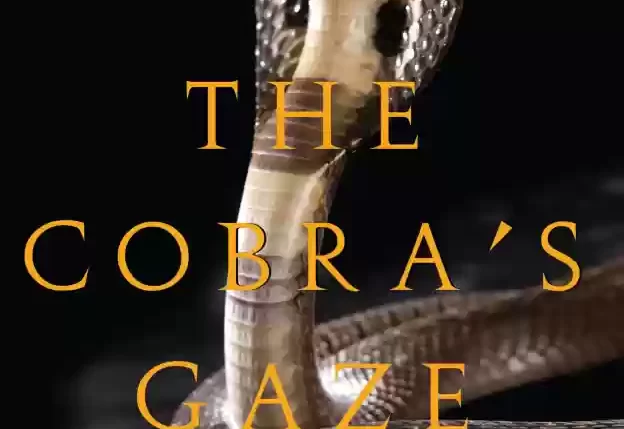
Book review: The Cobra`s Gaze by Stephen Alter
Where the wild things are
This is such an important work, a masterclass in ecological awareness for those of us who would read, absorb, learn. In an intense effort to show us the missing link between animals, birds and humans, how we perceive other species through our umwelt or sensory bubble, project human expectations on them and then proceed to mostly exploit and willfully destroy, Stephen Alter`s book is as much travel memoir as conservation textbook.
The writer roams known and relatively lesser-known wildlife parks, reserves, and waterways. He visits the late Billy Arjan Singh`s Dudhwa estate where the erstwhile hunter hand-reared tigers, he heads to Kuno to take a close look at the imported cheetahs` habitat, he examines the artwork in Bhimbetka and realizes most of them are of animals that lived in the region long before science assigned them names, including the one-horned rhinoceros, wild buffalo and Asian elephant which are no longer found in this part of Central India because of indiscriminate hunting and habitat loss.
At the Netravali Wildlife Sanctuary at Goa, he hears the spot-bellied eagle owl that has a blood-curling call, is literally stalked by a tiger for more than fifteen minutes at Bandavgarh, goes on a walking safari at the Satpura Tiger Reserve and yes, comes upon a brace of tigers. From the IISC campus in Bangalore, he rues the cruel fate of that hapless creature the slender loris, which is linked to supposed curative and magical properties and hence, often abused and killed. He goes to the Sunderbans to see the `ecological castaways,` the tigers living on a diet so desperately insufficient that they turn maneaters. He gazes long and hard at the animals carved on the magnificent Mahabalipuram rock friezes, goes to a sacred grove in Kodagu (Coorg) and watches an oracle in action there.
Alter doffs a hat to forest rangers, to the Agumbe Rainforest Research station (ARRS), the Wildlife Trust of India (WTI), tiger specialist Ullas Karanth, India`s late great birdman Salim Ali; the Bombay Natural History Society (BNHS); M Krishnan who the author calls India`s finest nature writer; Ashoka`s Edicts, the Irula Snake Catchers Cooperative, India`s primary source of snake venom, and other worthy initiatives.
There`s so much information packed in here. Alter tells us how the word `ghazal` derives from the English word gazelle; that the ancient tree at Kaliya Ghat in Mathura is actually kaim, not kadamb; the bizarre use of extra-sticky flypapers by the Gwalior Shikar Department to net lions rendered immobile by these sticky strips; how some elephants can take an immediate and inexplicable dislike to humans; how there was a time in Assam when a hunter who shot a tusker was required by the forest department to kill a makhna too, in a futile attempt to redress the balance; that the sloth bear does not get its name from its slovenly appearance but was first called a `bear sloth` because of its long claws and unusual teeth; how otters maintain a communal latrine. How the northern parts of the Sunderbans were first settled by Sufi pirs and their followers; how sea snakes are five times more venomous than cobras; how the banian is connected to the Baniya community of traders who would set up shop under the branches of these large trees.
The Ladakh chapter is a gripping one, which tells of how the writer goes scouting the fabled snow leopard in the higher reaches of that moon desert, and what`s more, gets to gaze upon a mating pair for as long as fourteen hours, along with many other spotters who have braved Ladakh`s high altitude problems of insomnia, headaches and loss of appetite to lay eyes on this beautiful creature.
Alter places the cobra with its mesmeric gaze at the start and end of a book packed with adventure and information. He tells us the reptile`s eyesight isn’t too good and that they sense the world with their tongue. He talks of the awe and terror these creatures invoke in us humans, how they embody our primal fears as well as fascination, how king cobras emit deep growls when charging, and lets drop the tidbit that there is no anti-venom for a king cobra`s bite.
There is absolutely no preaching here, though there is no obfuscation either. Stating that the book is an effort to weave together a coherent and compelling litany of proverbs, parables and prayer that draw inspiration from the wild, Alter makes it clear that he is but an amateur naturalist. The reiterations are gentle but firm, couched in language that at times turns lyrical: how we are putting the big squeeze on animal habitats across the country, how overtourism in the wildlife parks cause untold damage to the species who inhabit them, how we need to get our act together vis-à-vis nature protection and conservation.
The Cobra’s Gaze by Stephen Alter. Aleph Books. ₹999. 424 pages.
This ran in the Sunday Express Magazine of 2 June 2024.
Related Links:
Book review: Feral Dreams/ Mowgli and His Mothers by Stephen Alter
Book review: Wild Himalaya by Stephen Alter
Book review: Becoming A Mountain by Stephen Alter
Book review: In the Jungles of the Night, A Novel about Jim Corbett by Stephen Alter
Book review: All the Way to Heaven by Stephen Alter
 Sheila Kumar • June 3, 2024